CRA Alleges Michigan Cannabis Processor Illegally Transported Products To Massachusetts Before License Surrender

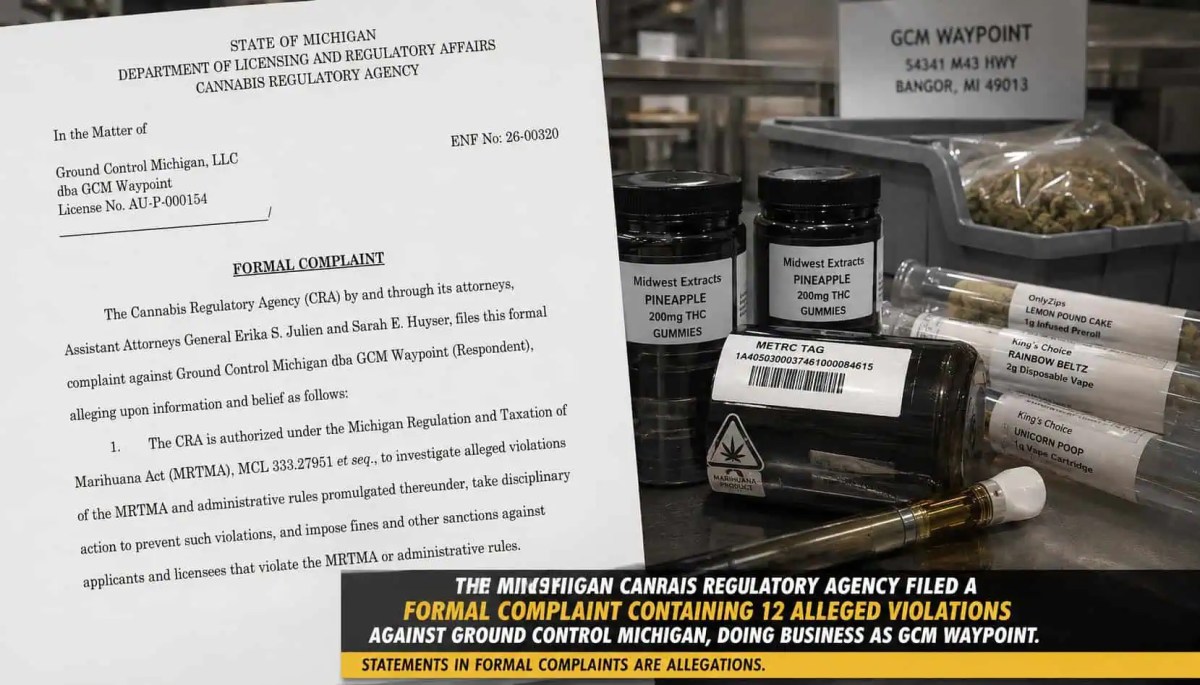
The consent order resolves Enforcement Action No. 26-00131
Michigan cannabis processor Ground Control Michigan, doing business as GCM Waypoint, has agreed to permanently surrender its state processor license after the Cannabis Regulatory Agency (CRA) alleged the company illegally transported marijuana products across state lines and committed numerous inventory and compliance violations.
The case centers on allegations that marijuana products produced and tracked under Michigan’s regulated cannabis system were discovered inside a licensed marijuana facility in Massachusetts, triggering a multi-state regulatory investigation. The allegations remain unproven, and the company resolved one enforcement action through a consent order without admitting wrongdoing.
According to a formal complaint filed by the CRA on June 4, Massachusetts cannabis regulators notified Michigan officials after discovering multiple Michigan-tagged marijuana products at a licensed marijuana producer’s facility. Investigators traced the products to GCM Waypoint’s adult-use processor license in Bangor. The products included gummies, vape cartridges, disposable vape products and infused pre-rolls sold under the Midwest Extracts, OnlyZips and King’s Choice brands.
CRA: Employee Initially Denied Transporting Products
The complaint alleges GCM Waypoint’s sales manager initially told investigators the marijuana products had been picked up in Michigan by an employee from the Massachusetts facility.
However, when CRA investigators later interviewed that Massachusetts employee, he allegedly said GCM Waypoint employees had delivered the products to Massachusetts while attending a cannabis trade show.
The complaint further alleges that during a second interview on March 30, the Michigan sales manager admitted he had lied to investigators and acknowledged personally transporting 249 marijuana products from Michigan to Massachusetts in his personal vehicle.
If proven, the allegations would represent a significant violation because marijuana remains illegal under federal law, and licensed cannabis products generally cannot be transported across state lines regardless of whether both states have legal cannabis programs.
To Read The Rest Of This Article On MI Tech News, Click Here